Dreaming of a never-ending bounty of fresh produce, even from a tiny urban patch? Then mastering balcony garden succession planting is your key to unlocking continuous harvests and maximizing every square inch of your small space. This expert guide will walk you through precise strategies, from microclimate analysis to advanced container techniques, ensuring your balcony transforms into a hyper-efficient food factory.
What is Balcony Garden Succession Planting?
Balcony garden succession planting is a strategic technique that involves making multiple plantings of crops in the same container or space over the growing season. Instead of planting everything at once and having a single, overwhelming harvest, you stagger your sowings and plantings. This ensures a steady supply of fresh vegetables, herbs, and even fruits, rather than gluts and gaps.
The core idea is simple: as soon as one crop is finished or past its prime, another is ready to take its place. According to the University of Wisconsin-Madison Extension, succession planting means that “As soon as one crop is finished plant another in the same plot or container.” This continuous cycle is especially powerful in small space gardening because it dramatically increases your overall yield from limited square footage.
What most people miss is that it’s not just about replanting; it’s about thoughtful timing and crop rotation balcony strategy. By planning ahead, you can enjoy a diverse range of fresh produce from your urban garden planning efforts, extending your harvest season significantly.
Why Practice Succession Planting in Small Spaces?
For anyone with a compact growing area, whether it’s a balcony, patio, or tiny backyard, succession planting is a game-changer. It directly addresses the primary challenge of limited space by maximizing its productive potential. Urban agriculture has seen a 340% growth since 2020, with millions now participating in metropolitan food production, highlighting the need for efficient methods like this.
The biggest benefit is undoubtedly continuous harvests. Instead of a single peak harvest that might overwhelm you with zucchini, you get a steady stream of fresh food for weeks or even months. This method can allow gardeners to double or triple their annual harvest in small spaces, according to research.
Beyond quantity, succession planting fosters greater variety and better use of resources. It prevents soil depletion by rotating crops and encourages you to be more attuned to your plants’ growth cycles. In practice, this means fresher food, less waste, and a more productive balcony vegetable garden continuous harvest, contributing to the average household savings of $600-$900 per year on produce.
Planning Your Balcony Succession Garden: A Step-by-Step Guide
Effective planning is the backbone of successful balcony garden succession planting. It requires a clear understanding of your space and your plants’ needs. Here’s how to develop a robust small space succession planting schedule:
1. Assess Your Balcony’s Microclimate
Before you plant anything, take a week to observe your balcony’s unique conditions. Note how many hours of direct sunlight each area receives throughout the day, and identify any wind tunnels or reflective surfaces. This microclimate analysis is crucial for selecting appropriate crops and determining optimal planting locations. A south-facing balcony will have very different potential than a north-facing one.
2. Map Your Growing Space
Draw a detailed diagram of your balcony, marking all containers, vertical gardening solutions, and potential planting zones. Label them with sun exposure notes. This visual map helps you envision where and when crops can be rotated. Consider both horizontal and vertical dimensions to truly maximize your footprint.
3. Choose Your Crops Wisely
Select crops with varying maturity dates and growing habits that are suitable for containers. Think about what your household actually eats to avoid growing food that goes to waste. We’ll delve deeper into specific crop recommendations shortly.
4. Create a Planting Schedule
This is where the magic happens. For each container or section, plan out what you’ll plant, when you’ll sow or transplant it, and when you expect to harvest it. Then, immediately schedule the next crop to take its place. This staggered planting methods approach ensures continuous productivity. For example, if your spring lettuce finishes in early summer, plan for beans or bush cucumbers to follow.
An easy way to start is to pick a few favorite fast-growing crops and focus on their succession. For instance, radishes can be harvested in as little as 3-4 weeks, making them ideal for quick turnovers.
Choosing the Best Crops for Balcony Succession Planting
Not all plants are created equal for container succession planting guide. The best crops for a balcony garden succession planting strategy are those that mature quickly, have a compact growth habit, or can be harvested repeatedly. Here are some top picks:
Fast-Maturing & Cut-and-Come-Again Crops:
- Leafy Greens: Lettuce, spinach, arugula, kale, and mustard greens are perfect. You can harvest outer leaves repeatedly, or plant small batches every 2-3 weeks.
- Radishes: Ready in as little as 3-4 weeks, they are excellent for quick turnovers.
- Bush Beans: Unlike pole beans, bush varieties are more compact and produce a concentrated harvest, freeing up space sooner for the next crop.
- Herbs: Many herbs like basil, cilantro, and dill can be succession planted or harvested continuously for months.
Climbing & Vertical Options:
- Peas: A fantastic early-season crop. Once they’re done, the trellis can be repurposed for heat-loving climbers.
- Cucumbers (Bush or Dwarf Vining): These can follow peas on a trellis, making efficient use of vertical space.
- Cherry Tomatoes (Determinate Varieties): While not strictly succession planted in the same spot, determinate varieties produce their fruit all at once, allowing for rotation with another crop or a new tomato plant.
Strategic Pairings for Balcony Plant Selection:
- Peas followed by Cucumbers: Spring peas vacate their trellis, making way for summer cucumbers or even small watermelons. This is a classic example of maximizing shared resources.
- Lettuce followed by Bush Beans: A rapid spring lettuce harvest can be immediately followed by a mid-spring planting of bush beans.
- Radishes interplanted with Carrots: Sow them together; the quick-growing radishes are harvested first, giving the slower carrots more room to mature.
“Succession planting has taught Meg that no matter how much space you have to garden in, there is always room to grow more food.” – Meg McAndrews Cowden, Seed to Fork founder.
Mastering Succession Planting Methods for Containers
The beauty of container gardening techniques is their flexibility, which is amplified by succession planting. Here are key methods tailored for your balcony:
1. Staggered Planting
This is the most common method. Instead of planting all your lettuce seeds at once, sow a small batch every 1-2 weeks. This ensures a steady supply rather than a single, overwhelming harvest. It’s perfect for leafy greens, radishes, and bush beans.
2. Interplanting (or Intercropping)
This involves planting two or more compatible crops in the same container at the same time. One crop is typically fast-growing and harvested early, making space for the slower-growing companion. An example is planting radishes and carrots together; the radishes are pulled first, giving the carrots room to expand. Meg McAndrews Cowden notes that “Interplanting, or intercropping, ‘is really the pinnacle of succession planting.'”
3. Relay Planting
With relay planting, you sow a new crop when the previous one is nearing the end of its harvest. For instance, start pepper seedlings indoors and transplant them into a container where garlic was just harvested. This minimizes downtime for the container. Garlic harvested in early June can be followed by peppers or tomatillos, which can even grow alongside the remaining garlic initially.
4. Vertical Integration
Don’t forget up! Vertical gardening solutions like trellises, wall planters, and railing planters are essential for maximizing yield in small container gardens. Use trellises for climbing crops like peas, cucumbers, or pole beans, and wall pockets for herbs or greens. Once an upward-growing crop is finished, replace it with another climber or even a determinate bush variety below.
Fabric grow bags are another excellent tool for container succession planting. They are lightweight, allow for good aeration, and can be easily moved or rotated. For more advanced vertical setups, consider linking to Advanced Vertical Garden Yield: Precision Home Harvests.
Optimizing Your Balcony Microclimate for Continuous Harvests
Your balcony isn’t just a space; it’s a unique ecosystem. Understanding and manipulating its microclimate analysis is crucial for successful urban garden succession planting tips. Here’s how to harness your specific conditions:
1. Hourly Sun Mapping
This is more detailed than a general “full sun” assessment. Spend a day mapping exactly where direct sunlight falls on your balcony every hour. Note how shadows shift and where intense reflected heat might occur from walls or glass. This precise data allows you to place sun-loving plants where they’ll thrive and shade-tolerant crops in less direct light, optimizing their growth cycles for continuous production.
2. Wind Tunnel Effects
Balconies often experience strong winds, which can desiccate plants and damage delicate foliage. Identify these wind tunnels. Use taller, sturdier plants or temporary screens to create sheltered zones for more sensitive succession crops. Windbreaks can significantly reduce water loss and plant stress, ensuring your continuous harvests aren’t interrupted by harsh conditions.
3. Heat Sinks & Reflective Surfaces
Concrete walls and railings can absorb and radiate heat, creating hotter microclimates. Conversely, a shady corner might stay cooler. Use these variations to your advantage. Plant heat-tolerant crops like peppers or eggplants near heat-retaining walls, and position cool-season greens like lettuce in shadier, cooler spots to extend their harvest window. This thoughtful placement is key for balcony plant selection.
By understanding these nuances, you can tailor your planting schedule and plant choices with precision, truly extending your growing season.
Nutrient & Pest Management for Balcony Succession Gardens
Continuous cropping in containers places unique demands on soil health and pest control. Proactive nutrient management containers and integrated pest strategies are vital for healthy balcony garden succession planting.
1. Sustaining Soil Fertility
Unlike in-ground gardens, containers have a finite amount of soil, which depletes nutrients faster with continuous harvests. Regular replenishment is critical. Top-dress with compost or worm castings between crop rotations. You can learn more about enriching your soil with Organic Soil Amendments Guide: Enrich Your Garden Naturally.
Use a balanced, slow-release organic fertilizer at the start of each new planting cycle. Liquid feeds can also provide quick boosts, especially for heavy feeders. Remember, healthy soil means healthy plants, which are more resistant to pests and diseases.
2. Integrated Pest Management (IPM) in Small Spaces
Pests can spread rapidly in confined balcony spaces. Your succession planting strategy itself can be a tool for pest management. Crop rotation balcony practices prevent pest populations from building up on specific host plants. For example, don’t follow tomatoes with peppers in the same pot, as they share common pests.
Regular inspection is paramount. Check your plants daily for early signs of pests or disease. Use physical barriers like row covers for vulnerable young plants, and introduce beneficial insects if appropriate for your balcony environment. For specific issues, you can refer to guides like Treat Whiteflies on Garden Plants: Expert IPM Guide.
What I’ve observed is that a diverse balcony garden, with a mix of edibles and beneficial insect-attracting flowers, tends to be more resilient. Companion planting, such as marigolds near vegetables, can also deter pests.
Balcony Garden Succession Planting: Realistic Yields & Case Studies
While the promise of “more food” is appealing, what does a balcony vegetable garden continuous harvest truly look like in terms of realistic yields? Urban farms produce 15-20 times more food per acre than traditional agriculture, demonstrating the efficiency of intensive methods. For a balcony, this translates to significant personal production.
Case Study 1: The 4×6 Foot Balcony
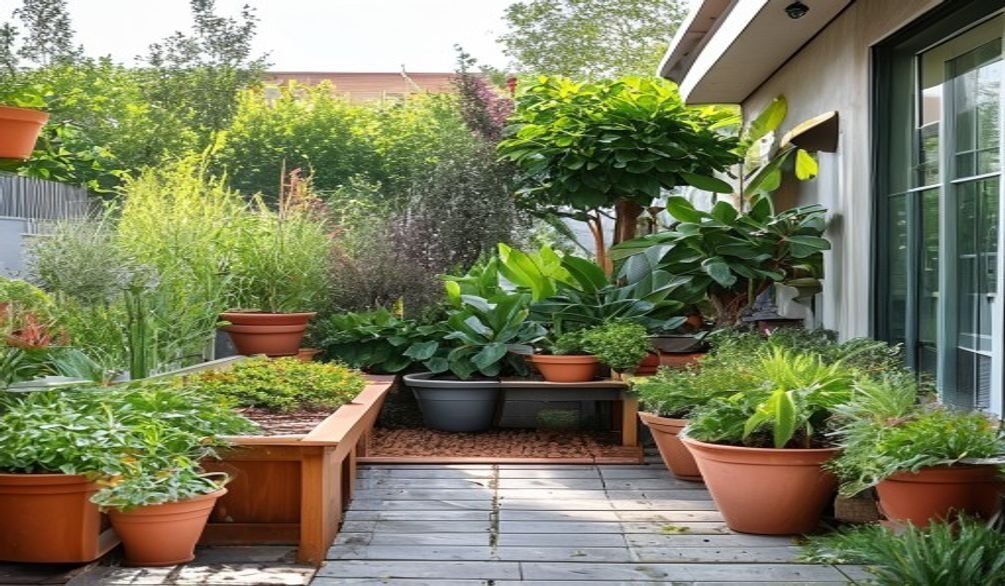
Consider a modest 4×6 foot apartment balcony. With smart vertical gardening solutions and succession planting, this space can support a surprising number of plants. One example involved a self-watering raised bed and a dozen containers. By rotating cool-season crops like lettuce, radishes, peas, and kale in spring, and following them with bush cucumbers, peppers, and determinate tomatoes in summer, the gardener achieved fresh produce almost daily from May through October. This balcony yielded approximately 28 edible plants over the season, providing a substantial portion of the household’s salad greens and cooking vegetables.
Case Study 2: Thriller, Spiller, Filler for Food
The “Thriller, Spiller, Filler” container recipe, typically for ornamentals, can be ingeniously adapted. Imagine a central “thriller” determinate tomato, “spillers” like nasturtiums or sweet potato vines (edible varieties), and “fillers” of succession-planted bush beans or basil. As the basil is harvested, a new batch is sown, or a different filler like cilantro takes its place. This method maximizes both aesthetic appeal and edible output.
The short answer is, while you might not feed an army, a well-planned balcony garden succession planting can significantly supplement your grocery needs, providing fresh, nutrient-rich produce. Homegrown produce can contain 30-50% higher vitamin content due to reduced time between harvest and consumption, according to research.
Frequently Asked Questions
What is succession planting for small spaces?
Succession planting for small spaces is a gardening technique where you make multiple, staggered plantings of crops throughout the growing season to ensure continuous harvests from limited areas. It involves replanting a new crop as soon as an existing one is harvested or past its prime, maximizing the productivity of each container or bed.
What vegetables are good for succession planting in containers?
Excellent vegetables for succession planting in containers include fast-maturing crops like leafy greens (lettuce, spinach, arugula), radishes, and bush beans. Herbs such as basil and cilantro are also great choices, along with compact varieties of cucumbers and determinate tomatoes that can be rotated or interplanted effectively.
How do you plan a succession garden for a balcony?
To plan a succession garden for a balcony, first conduct a detailed microclimate analysis of your space, noting sun exposure and wind patterns. Then, map your containers and vertical solutions, select crops with varying maturity dates, and create a precise planting schedule that outlines when each crop will be sown, harvested, and succeeded by the next.
What are the 3 types of succession planting?
The three main types of succession planting are staggered planting, interplanting (or intercropping), and relay planting. Staggered planting involves sowing small batches of the same crop every few weeks; interplanting grows two compatible crops simultaneously in the same space; and relay planting involves sowing a new crop when the previous one is nearing its harvest end.
Embracing balcony garden succession planting is more than just a technique; it’s a mindset that transforms your small space into a productive, ever-yielding oasis. By applying these expert strategies for microclimate analysis, container optimization, and smart crop rotation, you’ll enjoy a steady stream of fresh, homegrown food throughout the season. Start planning your continuous harvest today and experience the incredible satisfaction of maximizing your urban garden’s potential.