
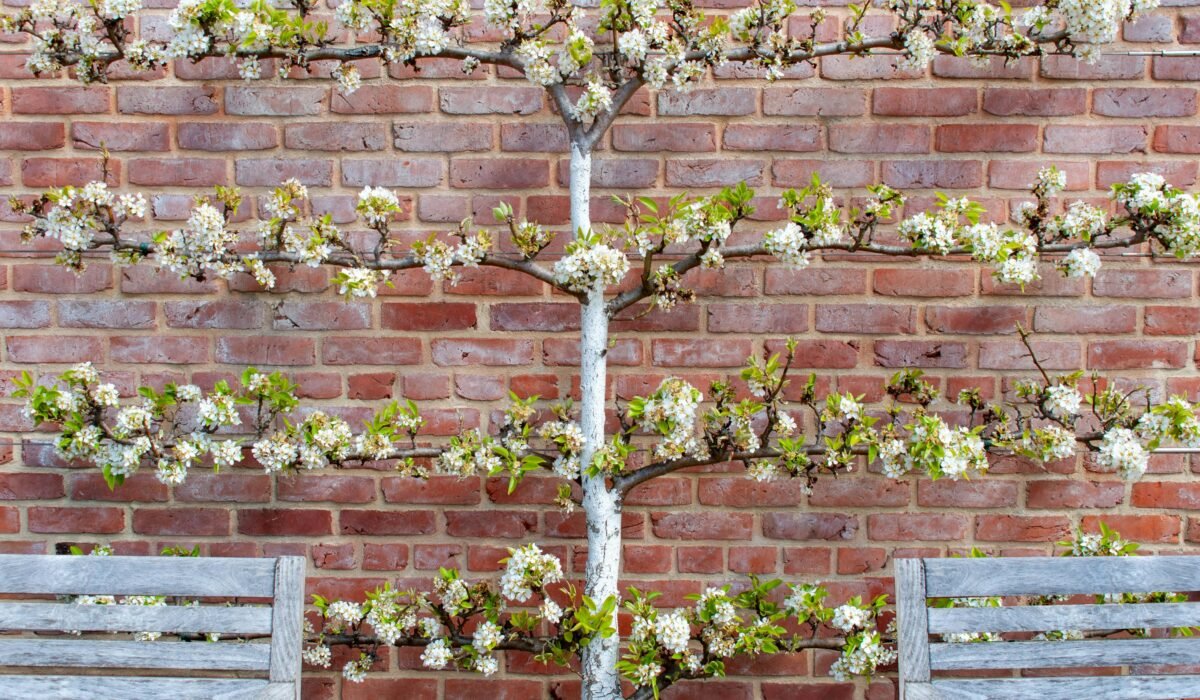
Dreaming of a bountiful orchard but only have a tiny backyard or a narrow wall? Espalier fruit trees in small spaces offer a revolutionary solution, transforming limited areas into productive, living works of art. This ancient technique allows you to cultivate delicious fruit even when space is at a premium, promising both aesthetic beauty and a generous harvest for your urban gardening efforts.
What Are Espalier Fruit Trees and Why Grow Them in Small Spaces?
Espalier is an age-old horticultural practice where fruit trees are trained to grow flat against a wall, fence, or trellis for fruit trees. This isn’t just about aesthetics; it’s a sophisticated method of vertical gardening that optimizes light exposure and air circulation for your plants. Dr. Ron Perry and Kristin Getter of Michigan State University describe espalier as “an ancient art that allows the skilled gardener to train shoots in various designs and angular patterns often creating symmetry and artistic value while concurrently providing fruit for the table.”
For those with limited room, espalier fruit trees offer significant advantages. They allow you to cultivate a surprising amount of fruit in narrow beds, along pathways, or even on a sunny balcony. This makes them perfect for small garden design and urban gardening fruit enthusiasts who thought a home orchard was out of reach.
Beyond saving space, espaliered trees benefit from increased sunlight exposure, which can lead to larger, sweeter fruits. Their flattened form also facilitates easier harvesting and pest management, making fruit production techniques more efficient. What most people miss is that the disciplined structure of an espalier can also create a stunning architectural feature in your landscape.
Which Fruit Trees Are Easiest to Espalier?
When considering how to espalier fruit trees, selecting the right variety is crucial for success, especially for beginners. The easiest fruit trees to espalier are those with flexible wood and a natural tendency to produce fruit on spurs, which are short, fruit-bearing branches. Apples and pears consistently top the list for their cooperative growth habits and high yield potential.
The Wisconsin Horticulture Division of Extension specifically suggests that apples and pears are particularly suitable for espalier. They adapt well to training and readily form the desired patterns. When choosing, look for dwarf fruit trees or those grafted onto dwarfing rootstock, as these naturally have a more manageable size and vigor, making the training process simpler.
Recommended Apple and Pear Varieties for Espalier
- Apples: Dwarf Fuji, Dwarf Honeycrisp, Dwarf Granny Smith, Cox Orange Pippin, Golden Russet, and Yellow Newton Pippin are excellent choices. Heirloom varieties like ‘Horse’ and ‘Aunt Rachel’ are also noted for their success in espalier.
- Pears: ‘Kieffer’ pears are often favored for their vigorous growth and disease resistance, making them a robust option for training.
These varieties are chosen not just for their fruit quality but also for their predictable growth patterns, which are essential for maintaining the intricate espalier forms. This careful selection ensures you’re set up for success from the start.
Do Espalier Fruit Trees Produce Fruit, and How Long Does it Take?
The short answer is a resounding yes, espalier fruit trees produce fruit, and often with greater efficiency and quality than their untamed counterparts. The intensive fruit tree pruning involved in espalier redirects the tree’s energy. Instead of focusing on vigorous vertical growth, the tree channels its resources into developing fruit-bearing spurs.
This strategic energy allocation results in heavier yields than on ordinary trees. Some reports even suggest that espalier can lead to up to 50% increases in fruit production in certain varieties compared to untrained trees. Furthermore, the increased sunlight exposure due to the flattened form means that the fruit produced on an espaliered tree is often larger and sweeter, concentrating sugars and flavor.
As for how long it takes, patience is a virtue in espalier. Fruit production typically begins within 2 to 5 years, depending on the tree’s age when planted, the variety, and the specific espalier pattern chosen. While it requires an initial investment of time and consistent care, espaliered fruit trees are remarkably long-lived. Some espaliered apple trees are still producing fruit after 150 years, demonstrating their sustained productivity and incredible longevity.
Espalier Techniques: Training Your Fruit Tree for Maximum Yield
Training your fruit tree for maximum yield through espalier is a process that combines art and horticulture, focusing on precise fruit tree pruning and careful guidance. The fundamental principle is to create a rigid framework of permanent branches, from which fruit-bearing spurs emerge. This requires a strong trellis for fruit trees or a sturdy wall support system.
Cody Copp, a Horticulturist with Oregon State University Extension Service, emphasizes that “The most important aspect of growing an espaliered tree … is pruning.” He notes that “An espalier must be pruned several times during the growing season to keep it in control. That’s a lot of cutting.” This frequent attention is key to shaping the tree and encouraging fruit production over vegetative growth.
Basic Steps for Training an Espalier
- Select Your Pattern: Common espalier patterns include the informal fan, formal cordon (single or multiple horizontal tiers), candelabra, and oblique. Choose a pattern that suits your space and the tree’s growth habit.
- Prepare Your Support: Install a sturdy trellis or wires against your chosen surface. Wires should be spaced 12-18 inches apart horizontally for most patterns.
- Plant Your Tree: Plant a young, unbranched whip (a one-year-old tree with no side branches) directly in front of your support.
- Initial Pruning: Cut the whip back to about 18-24 inches from the ground, just above a bud. This encourages branching at the desired height.
- Train and Tie: As new shoots emerge, select the strongest ones to form your espalier patterns. Gently bend and tie these shoots to your support structure using soft garden twine or plant ties. Remove any unwanted shoots.
- Ongoing Pruning: Throughout the growing season, perform regular summer pruning to remove vigorous upright growth (water sprouts) and encourage the development of fruit spurs. Winter pruning focuses on maintaining the structure.
Essential tools for this process include sharp pruning shears (like Felco F-8 or Corona BP3180D), soft ties, and a keen eye for detail. This systematic approach ensures the tree’s energy is directed towards developing a strong framework and maximizing fruit production techniques.
Common Challenges and Solutions for Espalier Fruit Trees
While growing espalier fruit trees in small spaces is incredibly rewarding, gardeners may encounter specific challenges. Uneven growth, pest issues, and disease susceptibility are common, but with a mindful approach, most can be effectively managed. Addressing these issues proactively is crucial for maintaining the health and productivity of your espalier.
Troubleshooting Espalier Specific Issues
- Uneven Growth: Sometimes, one side or branch grows more vigorously than others, disrupting the espalier pattern.
- Solution: Implement corrective espalier pruning techniques. Prune the stronger side more aggressively to slow its growth, and allow the weaker side to grow more freely. Bending vigorous shoots below horizontal can also reduce their vigor.
- Pest and Disease Susceptibility: While espalier’s open structure can improve air circulation (a benefit highlighted by Wisconsin Horticulture for reducing disease), trees can still fall victim to pests or fungal issues.
- Solution: Regular inspection is key. Due to their accessible form, espaliers are easier to monitor. Apply organic pest control methods promptly. Ensure proper spacing for good air flow, and promptly remove any diseased foliage.
- Recovery from Neglect: An espalier that has been neglected can become overgrown and lose its form.
- Solution: Don’t despair. A neglected espalier can often be restored over several seasons. Start by removing dead or diseased wood, then gradually prune back overgrown branches to re-establish the main framework. This process requires patience and a clear vision of the desired shape.
In practice, consistent observation and timely intervention are your best tools. A small issue addressed early prevents it from becoming a major problem, ensuring your espalier fruit trees thrive.
Espalier Beyond Apples and Pears: Unexpected Varieties for Small Spaces
While apples and pears are the go-to choices for espalier, the technique’s versatility extends to a surprising range of other fruit tree varieties, offering exciting possibilities for garden yield optimization. Exploring these less common options can add unique flavors and visual interest to your compact garden.
Underutilized Espalier Fruits
- Pomegranates: The ‘Sweet’ pomegranate has been successfully espaliered in an informal “fan” method against a block wall. Their beautiful, showy blooms and distinctive fruit make them an excellent choice for a warm, sunny spot. They adapt well to training and can thrive in limited spaces.
- Plums, Damsons & Gages: These stone fruits are ideal for fan training, especially when grafted on St Julien ‘A’ rootstock, which controls their vigor. The ‘Golden Transparent’ gage, for instance, can be trained in a zigzag fan, producing honey-sweet, cherry-sized fruit even in a constrained area.
- Figs: Certain fig varieties can also be successfully espaliered, particularly in warmer climates or against a south-facing wall that provides protection. Their large, architectural leaves and delicious fruit make them a striking addition.
- Citrus: In frost-free regions, dwarf citrus varieties can be trained against a warm wall. Their evergreen foliage and fragrant blossoms add year-round appeal, alongside their juicy fruit.
When selecting these unexpected varieties, consider their natural growth habit and climate requirements. Some may require more frequent summer pruning to manage their vigor, but the reward of a diverse, productive espalier is well worth the effort.
The Cost-Benefit of Espalier: DIY vs. Pre-Trained Trees
Embarking on an espalier project involves a choice between purchasing a pre-trained tree or starting with a young sapling and training it yourself. This decision often boils down to budget, patience, and your desire for hands-on gardening, profoundly impacting the overall cost-benefit of espalier for your small garden.
Pre-Trained Espaliers: The Instant Solution
Pre-trained espalier trees offer instant gratification and a mature look. They are typically several years old and have already been shaped into a specific pattern by expert growers. However, this convenience comes at a significant price. A four-tier espalier, for example, can potentially cost over a thousand dollars. While this provides immediate aesthetic value and fruit production, it represents a substantial initial investment.
DIY Espalier: The Economical and Rewarding Path
Starting with a young, unbranched tree (often called a “whip”) is a much more cost-effective approach. These young trees typically range from $35 to $95, making the initial outlay considerably lower. The trade-off is the time and effort required for training, which can take 3-5 years to establish a recognizable pattern and consistent fruit production.
Here’s the thing: while the DIY route demands patience and consistent fruit tree pruning, the long-term yield and personal satisfaction are immense. You gain a deeper understanding of your tree, and the aesthetic value of a self-trained espalier is arguably more rewarding. For those focusing on espalier fruit trees small spaces, the DIY approach often provides a better return on investment, blending cost-efficiency with the joy of cultivating your own living art.
Mindful Espalier: A Seasonal Guide to Cultivating Your Fruit Trees
Cultivating espalier fruit trees is more than just a technique; it’s a mindful journey that requires consistent attention, patience, and a deep connection with your plants. This “Mindful Espalier Gardener” approach views pruning and training as an ongoing dialogue with the tree, leading to both exquisite beauty and maximized garden yield optimization.
In practice, the success of your espalier fruit trees for tight spaces hinges on understanding their seasonal needs. Each season brings specific tasks essential for maintaining the tree’s form and promoting abundant fruit production.
Seasonal Espalier Care
- Winter (Dormant Season): This is the primary time for structural pruning. Focus on removing dead, diseased, or crossing branches, and shortening leaders to maintain the desired height and spread. This helps establish the permanent framework.
- Spring (Bud Break to Bloom): As buds swell and flowers emerge, monitor for pests and diseases. Minimal pruning may be done to remove any late-emerging suckers or water sprouts. Ensure new growth is gently tied to the support structure to guide its direction.
- Summer (After Fruiting): Summer pruning is crucial for directing energy to fruit development. Remove vigorous upright shoots (water sprouts) and shorten side shoots to encourage the formation of fruit spurs. This is where the bulk of your “lot of cutting” (as Cody Copp noted) will occur.
- Autumn (Harvest to Leaf Drop): Harvest your delicious fruit! After harvesting, continue to monitor for any late-season pest issues. Prepare your tree for winter by clearing fallen leaves and ensuring ties are secure.
Developing the “gardener’s eye” for espalier means learning to anticipate growth and make informed decisions about where and when to prune. This continuous engagement ensures that your espalier not only produces a fantastic harvest but also remains a stunning feature in your garden year after year.
Frequently Asked Questions
What is the easiest fruit tree to espalier?
The easiest fruit trees to espalier are typically apples and pears, particularly those grafted onto dwarfing rootstock. Their flexible wood, predictable growth habits, and natural tendency to produce fruit on spurs make them highly cooperative for training into various espalier patterns. This makes them ideal for beginners learning how to espalier fruit trees.
Do espalier fruit trees produce fruit?
Yes, espalier fruit trees absolutely produce fruit, and often with higher yields and improved quality compared to un-trained trees. The strategic pruning involved in espalier redirects the tree’s energy into fruit-bearing spurs, leading to larger, sweeter fruit due to increased sunlight exposure and concentrated energy.
How long does it take an espalier tree to fruit?
An espalier tree typically begins to produce fruit within 2 to 5 years after planting, depending on the tree’s initial age, the specific variety, and the chosen training method. While the initial years are focused on establishing the structural framework, consistent care and proper pruning will lead to a productive harvest in due time.
Do espalier fruit trees need a trellis?
Yes, espalier fruit trees almost always require a sturdy support system, such as a trellis for fruit trees, wires strung against a wall, or a strong fence. This support is essential for training the branches into their desired flat pattern and providing the necessary structure to hold the weight of the growing fruit, especially in small spaces.
Embracing espalier fruit trees in small spaces is a testament to the power of thoughtful garden design and dedicated cultivation. By understanding the principles of training, pruning, and mindful care, you can transform even the most confined areas into a productive and beautiful home orchard. Start your espalier journey today and enjoy the bounty of fresh, homegrown fruit, no matter how limited your space.







