
Imagine stepping onto your patio or into your compact backyard and plucking a perfectly ripe apple or a juicy peach, still warm from the sun. This isn’t a dream reserved for sprawling orchards; it’s an achievable reality for anyone with a passion for homegrown produce, thanks to the magic of dwarf fruit trees and smart gardening techniques. Choosing the best fruit trees small gardens can accommodate transforms limited spaces into bountiful edible landscapes.
The desire for fresh, sustainable food is growing, and modern gardeners are discovering that even the smallest plots, balconies, or patios can yield delicious harvests. This guide will walk you through everything you need to know to select, plant, and care for fruit trees in your compact garden, bringing the orchard experience right to your doorstep.
Understanding Dwarf, Semi-Dwarf, and Columnar Fruit Trees
When you’re looking to grow fruit trees in small gardens, understanding the terminology around their size is crucial. You’ll primarily encounter three classifications: dwarf, semi-dwarf, and columnar. Each offers distinct advantages for limited spaces, allowing you to match the tree’s growth habit to your garden’s footprint.
The Role of Rootstock: Grafting for Size Control
Most compact fruit trees achieve their smaller stature through a process called grafting. This involves joining a desired fruit variety (the scion) onto a specialized root system (the rootstock) that controls the tree’s overall size and vigor. Different rootstocks are bred to produce different mature tree sizes, disease resistance, and cold hardiness.
- Dwarf Fruit Trees: These are the smallest, typically reaching 6-10 feet tall. They are ideal for containers, raised beds, or very small garden plots. Dwarf trees often produce fruit earlier than their standard-sized counterparts, sometimes within 2-3 years. Popular rootstocks for dwarf apples include M27 and M9, while Gisela 5 rootstock is excellent for keeping cherry trees under 10 feet.
- Semi-Dwarf Fruit Trees: A step up in size, semi-dwarf trees generally grow to 10-15 feet tall. They offer a good compromise between manageable size and increased fruit production, making them suitable for slightly larger suburban backyards or as focal points in an edible landscape. They still fit well into many small gardens, especially with proper pruning.
- Genetic Dwarf Varieties: Less common but naturally small, these trees maintain a compact size without the need for dwarfing rootstock. They are often naturally bushy and require less pruning to stay small. Examples include miniature peach varieties like ‘Bonanza’.
Columnar Fruit Trees: The Small-Space Secret
Columnar fruit trees are a fantastic innovation for truly tiny spaces. These trees grow vertically, producing fruit directly on short spurs along their main stem, with very few side branches. Their narrow, upright habit makes them perfect for planting in rows, against walls, or even in pots on a narrow balcony. They typically reach 6-10 feet tall but only 1-2 feet wide, maximizing fruit production in a minimal footprint.
By understanding these distinctions, you can confidently choose the right foundation for your fruit trees small gardens, ensuring they thrive without overwhelming your space.
Top Fruit Tree Varieties for Small Gardens and Containers
With the right rootstock or genetic predisposition, a surprising number of fruit varieties can flourish in compact spaces. Here are some of the best fruit trees small gardens and containers can host, offering a delightful array of flavors and forms.
Apples: Crisp Harvests in a Small Package
Dwarf and columnar apples are among the most popular choices for small gardens. They are relatively easy to grow and offer a wide range of flavors. Look for varieties grafted onto M27 or M9 rootstock for true dwarf size. Columnar apple varieties, such as ‘Urban Apple’ series or ‘Northpole’, are perfect for super-tight spots, growing straight up like a green pillar.
Cherries: Sweet and Tart Delights
Dwarf cherry trees are a fantastic addition, often yielding fruit quickly. For sweet cherries, ‘Stella’ and ‘Compact Stella’ are excellent self-pollinating dwarf options, reaching 6-8 feet. For tart cherries, Canadian-bred varieties like ‘Carmine Jewel’, ‘Romeo’, ‘Juliet’, and ‘Wowza’ are naturally compact and incredibly productive, perfect for container gardening fruit.
Peaches and Nectarines: Sun-Kissed Sweetness
Miniature peaches and nectarines are a joy to grow in pots. Varieties like ‘Bonanza’, ‘Garden Gold’, and ‘Pixie’ peaches stay under 6 feet tall, offering full-sized, delicious fruit. Dwarf nectarines like ‘Necta-Zee’ also thrive in containers, bringing the taste of summer to your patio.
Apricots: Early Spring Blooms and Fruit
Dwarf apricot varieties such as ‘Pixie-Cot’ and ‘Sugar Pearls’ are well-suited for small spaces, reaching manageable sizes while still producing abundant fruit. Their early spring blossoms are also a beautiful sight, making them excellent choices for edible landscaping.
Citrus: A Taste of the Tropics
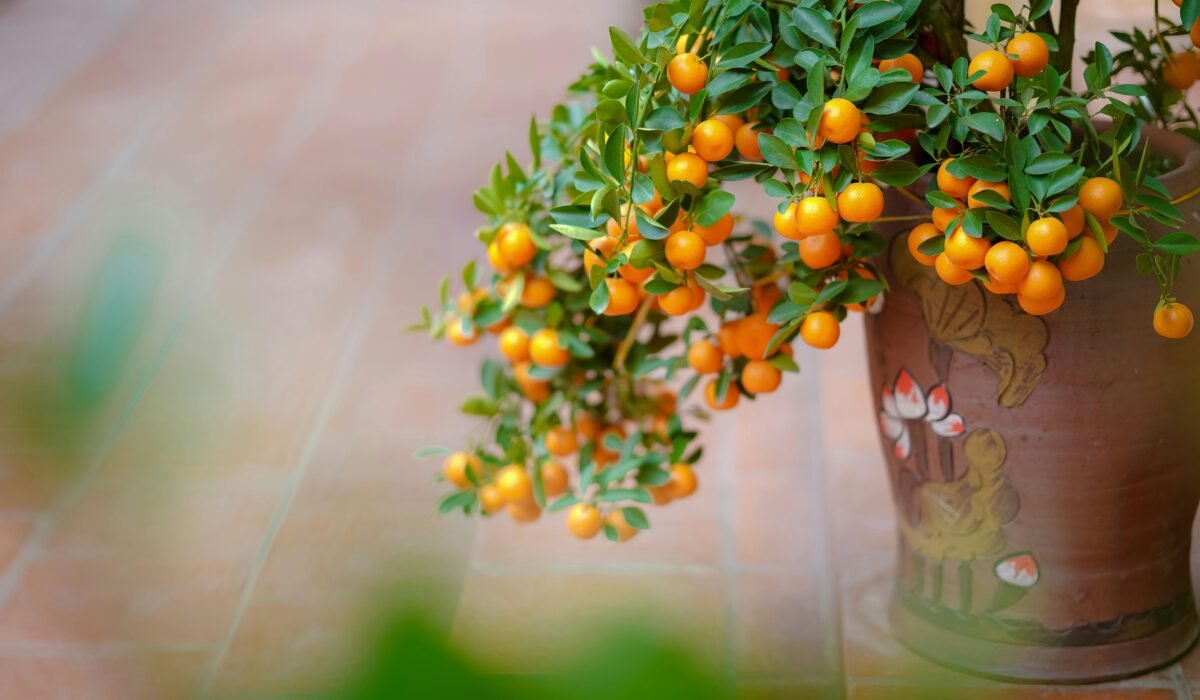
Many citrus trees are naturally well-suited for container gardening, especially in regions with colder winters where they can be brought indoors. Meyer lemons, Key limes, kumquats, and ‘Improved Dwarf’ varieties of oranges and mandarins are excellent choices. They offer fragrant blossoms and vibrant fruit, adding an exotic touch to your urban fruit gardening efforts.
Figs: Easy and Abundant
Fig trees are remarkably adaptable and thrive in containers. Varieties like ‘Brown Turkey’, ‘Chicago Hardy’, and ‘Little Miss Figgy’ are known for their compact size and reliable fruit production. They can be pruned heavily to maintain desired dimensions and often produce two crops per year.
Pears and Plums: Classic Orchard Flavors
Dwarf pear and plum trees are also available, offering classic orchard flavors in a smaller form. Look for varieties on dwarfing rootstock. ‘Bartlett’ and ‘Bosc’ pears have dwarf versions, and ‘Santa Rosa’ plums can be found on semi-dwarfing rootstocks, making them viable small space fruit trees.
Essential Care Tips for Compact Fruit Trees
While compact fruit trees are designed for smaller spaces, they still require specific care to ensure a bountiful harvest. Proper attention to their needs will keep them healthy and productive, whether they’re in the ground or in pots.
Sunlight, Soil, and Watering: The Fundamentals
- Sunlight: Fruit trees are sun-lovers. Ensure your chosen location receives at least six to eight hours of direct sunlight daily. This is paramount for fruit development and ripening.
- Soil: Well-draining soil is critical. For in-ground planting, amend heavy clay soils with compost to improve drainage. For container gardening fruit, use a high-quality potting mix specifically formulated for trees or shrubs, ensuring it drains well but also retains some moisture.
- Watering: Consistent watering is essential, especially for container-grown trees. They dry out much faster than in-ground plants. Check the soil moisture regularly by sticking your finger about an inch or two deep. Water when the top inch feels dry. During hot, dry periods, daily watering might be necessary. For more detailed guidance, see our post on Balcony Garden Watering: Essential Tips for Thriving Container Plants.
Pruning for Health and Production
Pruning is perhaps the most important aspect of fruit tree care for compact trees. It helps maintain their size, encourages fruit production, and promotes overall tree health. Learn about different pruning techniques like dormant pruning for structure and summer pruning for size control. You can find comprehensive advice in our guide to Master Pruning Backyard Fruit Trees for Big Harvests.
Fertilization and Pest Management
Feed your compact fruit trees with a balanced fertilizer formulated for fruit trees, following package instructions. Container plants may need more frequent feeding due to nutrient leaching. Stay vigilant for pests and diseases. Early detection and organic pest control methods can prevent major issues. For organic solutions, check out Organic Balcony Pest Control: Solutions for Container Plants.
Overwintering Container Fruit Trees
If you live in a region with cold winters (below USDA Zone 7), container-grown fruit trees will need protection. Move them to an unheated garage, shed, or basement once temperatures consistently drop below freezing. Ensure they still receive some light and occasional watering during dormancy.
Pollination Needs: Do You Need More Than One Tree?
One of the most common questions for gardeners with limited space is about pollination. Do you need multiple trees to get fruit? The answer depends on the specific fruit tree variety you choose. Understanding pollination requirements is key to ensuring a successful harvest from your small space fruit trees.
Self-Pollinating vs. Cross-Pollinating
- Self-Pollinating (Self-Fruiting) Trees: These trees can produce fruit with pollen from their own flowers. If you only have space for one tree, a self-pollinating variety is your best bet. Many peaches, nectarines, apricots, and some cherry varieties (like ‘Stella’ and ‘Compact Stella’) are self-fertile.
- Cross-Pollinating Trees: Most apples, pears, plums, and many sweet cherries require pollen from a different, compatible variety to produce fruit. This means you’ll typically need to plant at least two different varieties that bloom at the same time.
Solutions for Small Gardens with Cross-Pollinating Trees
Don’t despair if your heart is set on a cross-pollinating fruit! There are clever ways to overcome space limitations:
- Multi-Grafted Trees: These are single trees that have two or more compatible varieties grafted onto one rootstock. For example, you can find “fruit cocktail” trees with different plums, peaches, and apricots, or apple trees with 3-4 different apple varieties. This is an excellent solution for maximizing variety and ensuring pollination with just one plant.
- Neighbor’s Trees: If a neighbor has a compatible fruit tree nearby, its pollen can be carried by bees to your tree. This is less reliable but can sometimes work in urban settings.
- Bouquet Pollination: Temporarily place a bouquet of blooming branches from a compatible variety in a vase of water near your tree during its bloom period.
- Attracting Pollinators: Regardless of your tree’s pollination needs, attracting bees and other beneficial insects to your garden is always a good idea. Planting pollinator-friendly flowers nearby can help. Learn more about this in our guide on Attract Pollinators: Native Flower Garden Designs.
Always check the specific pollination requirements of the variety you are purchasing. Most reputable nurseries will provide this information.
Innovative Growing Techniques for Limited Space
Maximizing space is the name of the game when it comes to fruit trees small gardens. Beyond simply choosing dwarf varieties, several innovative techniques can help you get the most out of every square inch, turning even the most constrained areas into productive orchards.
Espalier: Art and Abundance
Espalier is an ancient horticultural technique of training trees to grow flat against a wall, fence, or trellis. This method is incredibly space-efficient and creates a stunning visual feature in your garden. By pruning and tying branches to a support structure, you can shape the tree into various patterns (like candelabra, fan, or cordon). Espaliered trees benefit from increased sun exposure and air circulation, often leading to healthier trees and better fruit production. Apples and pears are particularly well-suited for espalier, but peaches and even some citrus can also be trained.
Columnar Trees: Vertical Powerhouses
As mentioned earlier, columnar fruit trees are designed for vertical growth, making them perfect for narrow spaces. They produce fruit on short spurs directly off the main trunk, eliminating the need for wide-spreading branches. Plant them in a row to create a living fruit fence, or place them in containers on a balcony. These are truly a small-space secret for yielding abundant fruit without consuming much horizontal space.
High-Density Planting: More Fruit, Less Footprint
High-density planting involves planting multiple dwarf fruit trees (2-4) very close together, often in a single planting hole or within a few feet of each other. This technique, popularized by orchardists, allows you to grow several varieties in a small area, ensuring cross-pollination and extending your harvest season. The trees are kept small through careful pruning, creating a “fruit hedge” effect. This method is excellent for apples, pears, and plums, enabling successive harvests in a minimal footprint.
Container Gardening: Portable Orchards
Growing fruit trees in containers offers unparalleled flexibility. You can move trees to optimize sun exposure, protect them from harsh weather, or even rearrange your edible landscaping design. Ensure you use large enough pots (at least 15-25 gallons for most dwarf trees) with good drainage, and be diligent with watering and feeding. Many citrus, figs, dwarf peaches, and cherries thrive as container gardening fruit. For more ideas on maximizing your growing space, explore DIY Vertical Balcony Gardens: Maximize Your Growing Space.
Edible Landscaping: Beauty Meets Bounty
Integrate your fruit trees small gardens into your overall landscape design. Dwarf fruit trees, especially when espaliered or grown as attractive container specimens, can be just as ornamental as flowering shrubs. Their blossoms in spring and colorful fruit in summer and fall add beauty and interest, blending functionality with aesthetic appeal.
Enjoying Your First Harvest: What to Expect
The anticipation of your first homegrown fruit is one of the most exciting parts of planting fruit trees small gardens. While patience is a virtue, dwarf varieties often reward you much faster than their standard-sized counterparts. Understanding what to expect can help you prepare for and savor those initial sweet successes.
Time to Fruit: A Quicker Reward
One of the significant advantages of dwarf fruit trees is their tendency to produce fruit earlier. Most dwarf varieties will start bearing fruit within 2-3 years of planting, compared to 5-10 years for standard trees. Some very precocious varieties, especially those in containers, might even give you a small sample crop in their first year. This quicker turnaround makes urban fruit gardening incredibly rewarding.
Initial Yields and Increasing Abundance
Your first harvest might be modest, perhaps just a handful of fruits. This is perfectly normal! Young trees are still establishing their root systems and energy reserves. As your tree matures over the next few years, its fruit production will increase significantly. With proper fruit tree care, including pruning and adequate nutrition, your dwarf tree will eventually produce a substantial yield of full-sized, delicious fruit.
When to Harvest: The Taste Test
Knowing exactly when to pick your fruit can be a bit of an art. Here are some general guidelines:
- Color: The fruit should have developed its characteristic mature color.
- Firmness: Gently squeeze the fruit. It should feel firm but yield slightly to pressure. Overly hard fruit needs more time; mushy fruit is overripe.
- Taste: The ultimate test! Sample a fruit. It should be sweet, juicy, and flavorful. If it’s still tart or bland, give the others a few more days.
- Ease of Picking: Ripe fruit will usually detach easily from the branch with a gentle twist.
Remember that fruit on the same tree might ripen at different times, so you’ll likely be harvesting in stages. This extended harvest period means you can enjoy fresh fruit over several weeks.
The Joy of Homegrown Fruit
There’s an unparalleled satisfaction that comes from eating fruit you’ve grown yourself. The flavor, often superior to store-bought produce, the knowledge of how it was grown, and the simple act of stepping into your garden to pick a snack are incredibly fulfilling. This connection to your food and the natural world is at the heart of why so many are embracing fruit trees small gardens and patios.
Embrace the journey from tiny sapling to abundant harvest. Each year, your compact fruit trees will become more established, more productive, and an even greater source of joy and delicious sustenance for you and your family.
Growing your own fruit in limited spaces is not just possible; it’s a wonderfully rewarding endeavor that connects you with nature and provides delicious, fresh produce. By choosing the right dwarf fruit trees, understanding their care requirements, and perhaps experimenting with innovative growing techniques, you can transform any small garden, patio, or balcony into a productive orchard.
Don’t let space constraints deter you from the dream of homegrown fruit. Start planning your compact orchard today and look forward to the sweet rewards of your labor. Your delicious, fresh harvest awaits!







