Are you looking to boost your garden’s health and harvest without complex methods? Implementing a simple crop rotation plan for beginners is one of the most effective strategies you can adopt, promising healthier plants and more abundant yields while preserving your soil’s vitality.
What is Basic Garden Crop Rotation and Why Do It?
Basic garden crop rotation involves systematically changing the location of different plant families within your garden beds each growing season. This isn’t just a random shuffle; it’s a deliberate strategy that mimics natural ecological processes, preventing a host of common gardening problems.
The short answer to “why do it?” lies in its profound benefits for your garden’s ecosystem. A major global study co-coordinated by INRAE and China Agricultural University in 2025 found that rotational cropping increases total yields by 20% compared to continuous monoculture, a figure that rises to 23% when legumes are included.
Key Benefits of Crop Rotation
Understanding the advantages makes implementing a simple crop rotation plan for beginners much more rewarding. These benefits extend from the soil up to your harvest basket.
- Improved Soil Health: Different plants have varying nutrient needs and root structures. Rotating them helps balance soil nutrients, preventing depletion of specific elements and enhancing overall soil health. Legumes, for instance, are renowned for nitrogen fixation, enriching the soil for subsequent crops.
- Effective Pest Control: Many garden pests specialize in specific plant families. Moving plants to a new location confuses pests and breaks their life cycles, significantly reducing their populations. Research from March 2025 indicates diversified rotations can decrease pest populations by up to 80%.
- Reduced Disease Prevention: Soil-borne diseases can build up over time if the same crops are grown repeatedly in one spot. Rotating crops starves out disease pathogens that target specific plants, lowering disease incidence by as much as 50%.
- Enhanced Nutrient Cycling: Beyond just nitrogen, rotation helps cycle other essential nutrients. Deep-rooted plants can draw up minerals from lower soil layers, making them available to shallow-rooted plants in subsequent seasons. This also means less reliance on synthetic fertilizers, saving you time and money.
What most people miss is that crop rotation isn’t just about avoiding problems; it’s about actively building a more resilient and productive garden. As Jack Algiere, an expert from joegardener®, emphasizes, “Crop rotation offers more benefits to gardens of any size than most gardeners realize.”
The Core Principles of a Simple Crop Rotation Plan
To establish an effective vegetable crop rotation by family, you need to grasp a few foundational ideas. These principles simplify the process, making it easy to create your own rotation schedule.
Understand Plant Families
The golden rule of crop rotation is to never plant vegetables from the same family in the same spot year after year. This is crucial because members of the same plant families often share similar nutrient requirements, attract the same pests, and are susceptible to the same diseases. Iowa State University Extension advises that for crop rotation to be most effective, gardeners should not plant vegetables belonging to the same plant family in the same location for 3 to 4 years, or even longer if possible.
Vary Nutrient Demands
Vegetables can be broadly categorized by their nutrient needs, influencing your garden planning. This variation is key to maintaining balanced soil health:
- Heavy Feeders: These plants require a lot of nitrogen and other nutrients from the soil. Examples include corn, cabbage, broccoli, squash, and tomatoes.
- Light Feeders: These have moderate nutrient needs, such as carrots, beets, onions, and most herbs.
- Nitrogen Fixers (Legumes): These incredible plants, like beans and peas, actually add nitrogen to the soil through a symbiotic relationship with bacteria in their roots. They are invaluable for improving soil fertility.
By following a heavy feeder with a nitrogen fixer, then a light feeder, you naturally replenish and balance your garden’s nutrient profile, reducing the need for external fertilizers.
Break Pest and Disease Cycles
This principle is straightforward: moving plants around disrupts the life cycles of specific pests and soil-borne pathogens. If a disease organism thrives on tomatoes, planting something entirely different in that spot the next year will starve it out, giving your future tomato crops a clean slate. This is a powerful form of organic pest control and disease prevention, working in harmony with other strategies like organic weed management.
How to Group Vegetables for Effective Rotation
Grouping vegetables by their plant families is the cornerstone of any effective vegetable rotation. Once you know which plants belong together, designing your crop rotation chart for small gardens becomes much easier.
Common Plant Families for Garden Rotation
Here’s a breakdown of common plant families and their typical garden members:
- Legumes (Fabaceae): Beans (bush, pole, snap), peas, lentils, peanuts.
- Benefit: Nitrogen fixers, excellent for improving soil fertility.
- Brassicas/Crucifers (Brassicaceae): Cabbage, broccoli, cauliflower, kale, collards, Brussels sprouts, radishes, turnips, kohlrabi.
- Benefit: Often heavy feeders, benefit from nitrogen left by legumes.
- Nightshades (Solanaceae): Tomatoes, peppers, potatoes, eggplants.
- Benefit: Often heavy feeders, prone to specific diseases and pests.
- Cucurbits (Cucurbitaceae): Cucumbers, squash (summer and winter), pumpkins, melons.
- Benefit: Often heavy feeders, require plenty of space and water.
- Alliums (Amaryllidaceae): Onions, garlic, leeks, chives, shallots.
- Benefit: Generally light feeders, can deter some pests.
- Umbellifers/Apiaceae: Carrots, celery, parsley, parsnips.
- Benefit: Root crops that appreciate loose, well-drained soil.
- Chenopods (Amaranthaceae/Chenopodiaceae): Spinach, Swiss chard, beets, quinoa.
- Benefit: Often moderate feeders, good for varying nutrient uptake.
In practice, many beginners simplify this to a 4-group rotation for home garden success: Legumes, Root Crops (including Alliums and Umbellifers), Leaf Crops (Brassicas, Chenopods), and Fruit Crops (Nightshades, Cucurbits). This makes an easy crop rotation for raised beds or traditional plots.
My real-world observation is that keeping a simple chart or even just a mental note of these main groups will prevent you from accidentally planting tomatoes where you had potatoes last year – a common beginner mistake that undermines the whole rotation effort.
Designing Your 3-4 Year Crop Rotation Cycle
A 3-4 year crop rotation plan is the sweet spot for most home gardeners. This duration is long enough to effectively break pest and disease cycles and replenish soil nutrients without becoming overly complicated. Here’s how to map out your garden.
Mapping Your Garden and Crops
Start by dividing your garden into 3 or 4 distinct sections. These don’t have to be perfectly equal, but identifiable zones. For example, you might have “North Bed,” “South Bed,” and “Raised Bed 1,” “Raised Bed 2.”
Next, assign one of your plant family groups (e.g., Legumes, Brassicas, Nightshades, Root/Leaf Crops) to each section for the first year. The goal is that no single plant family returns to the same section for at least three to four years.
A Sample 4-Year Rotation for Home Garden
Let’s use a four-section garden (A, B, C, D) and four major plant groups. This is a common and effective simple crop rotation plan for beginners.
Year 1:
- Section A: Legumes (Beans, Peas)
- Section B: Brassicas (Cabbage, Broccoli, Kale)
- Section C: Nightshades (Tomatoes, Peppers, Potatoes)
- Section D: Root/Other (Carrots, Beets, Onions, Spinach)
Year 2: Shift everything clockwise (or counter-clockwise).
- Section A: Root/Other
- Section B: Legumes
- Section C: Brassicas
- Section D: Nightshades
Year 3: Continue the shift.
- Section A: Nightshades
- Section B: Root/Other
- Section C: Legumes
- Section D: Brassicas
Year 4: Final shift before returning to Year 1’s setup.
- Section A: Brassicas
- Section B: Nightshades
- Section C: Root/Other
- Section D: Legumes
After Year 4, Section A, which started with Legumes, will now be ready for Legumes again. This 4 year crop rotation for home garden strategy ensures that no single crop family depletes the same nutrients or encourages the same pests in one spot for an extended period.
Remember to keep a simple garden journal. This tracks what you planted where each year, making your garden planning much easier and helping you adapt for long-term success.
Crop Rotation for Small Spaces and Raised Beds
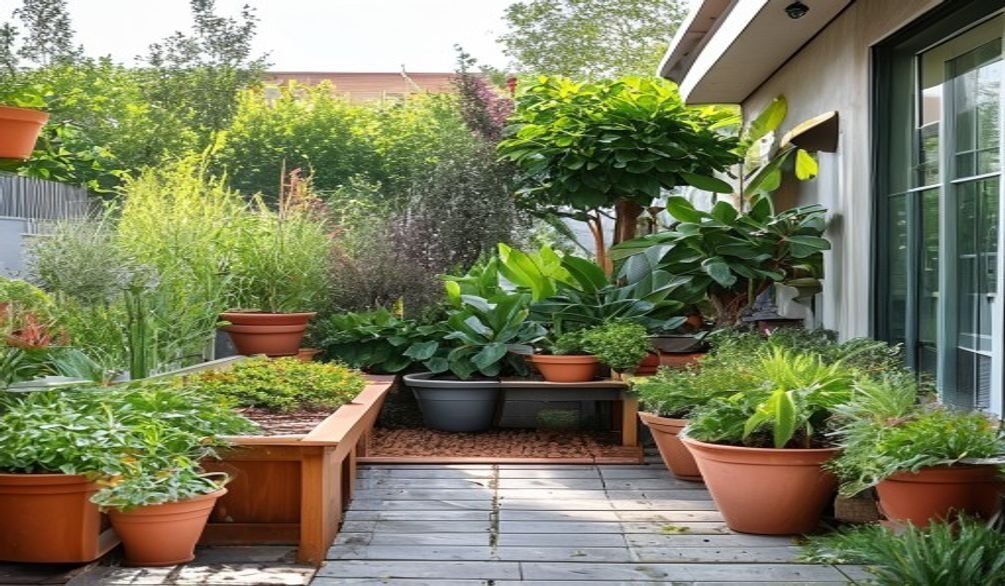
The beauty of crop rotation is its adaptability. Even if you’re working with limited space, an easy crop rotation for raised beds or small plots is entirely achievable. The principles remain the same; you just scale them down.
Strategies for Limited Space
For gardeners with a single raised garden bed or very small plots, the key is to think in “micro-zones” or to implement rotation within a single season through succession planting. Instead of dividing an entire garden, you divide your raised bed into 2-4 imaginary sections.
You can also rotate crops within a single season. For example, after harvesting early spring radishes (Brassica family), you could plant bush beans (Legume family) in the same spot, followed by spinach (Chenopod family) in late summer. This intense succession planting achieves rotational benefits on a smaller scale. For more tips on maximizing small spaces, explore our guide on growing organic vegetables in containers.
Raised Garden Beds: A Focused Approach
Raised garden beds are perfect for controlled crop rotation because their boundaries are clear. If you have several raised beds, treat each one as a “section” in your rotation plan.
If you only have one or two, focus on rotating within the bed itself. For instance, divide a 4×8 foot raised bed into four 2×4 foot quadrants. Allocate a different plant family to each quadrant annually. This focused approach still delivers significant benefits, especially for soil health and disease prevention. For practical advice on setting up your beds, see our guide on building and filling organic raised garden beds.
The critical insight here is that any rotation is better than no rotation. Don’t let limited space deter you from starting your simple crop rotation plan for beginners.
Beyond the Basics: Companion Planting & Green Manures
Once you’re comfortable with basic vegetable rotation, you can integrate other powerful organic gardening techniques to amplify your efforts. These methods don’t replace crop rotation but work synergistically with it.
Combining Crop Rotation with Companion Planting
Companion planting involves growing specific plants near each other to mutual benefit, such as pest deterrence, improved growth, or attracting beneficial insects. For beginners, this means adding specific plants within your rotating families.
- Example: Plant marigolds near your Nightshades (tomatoes, peppers) to deter nematodes and other pests.
- Example: Nasturtiums can act as a trap crop, drawing aphids away from more valuable vegetables, and their leaves are edible too!
The trick is to use companion planting to address specific issues within your rotational groups without overcomplicating your main plan. It’s about strategic pairings for enhanced benefits.
Integrating Green Manures and Cover Crops
Green manures, also known as cover crops, are plants grown specifically to benefit the soil, not for harvest. They are tilled into the soil while still green, adding organic matter and nutrients. This is a fantastic way to boost soil health during the off-season or in a fallow year within your rotation.
Common cover crops include clover (a nitrogen fixer), winter rye, and annual ryegrass, which prevent erosion and suppress weeds. Incorporating cover crops like clover or winter rye during the off-season can prevent erosion and enrich the soil, serving as an integral part of the rotation plan. The USDA ARS reported in 2024 that diverse rotations improved crop outcomes under poor growing conditions, demonstrating they can reduce the risk of crop loss in a changing climate.
A simple approach for beginners is to plant a cover crop in any section of your garden that will be left empty over winter. This ensures your soil is always working for you, building fertility and preventing erosion.
Adapting Your Simple Crop Rotation Plan for Long-Term Success
Gardening is rarely static, and your simple crop rotation plan for beginners should be flexible enough to evolve with your needs. Adapting your plan ensures long-term success and resilience.
Adjusting for Unforeseen Circumstances
Life happens, and sometimes a planned rotation gets disrupted. Maybe a crop failed, you decided to grow an extra bed of your favorite tomatoes, or you moved gardens entirely. Don’t panic. The principle is to get back on track as soon as possible.
If a section was supposed to get legumes but you had a crop failure, you can plant another nitrogen-fixing cover crop for the rest of the season, or simply adjust your rotation for the next year, ensuring that the next crop isn’t from the same family as the failed one. The key is to keep a garden journal to track your actual plantings and make informed decisions.
Transitioning an Established Garden
Many beginners start with an established garden that hasn’t followed a rotation. To transition, identify what was grown in each section for the past 1-2 years (if you can remember). Then, simply start your 3-4 year cycle from the current year, ensuring you plant a different family in each section than what was there last year. It’s never too late to begin.
My personal experience shows that gardeners often feel overwhelmed by the idea of “perfect” rotation. The reality is, consistent effort to rotate, even imperfectly, yields far better results than no rotation at all.
Expert Tips for Beginner Crop Rotators
To truly master your simple crop rotation plan for beginners, here are some actionable insights from experienced growers that go beyond the basic instructions.
Start Small and Keep it Simple
Don’t try to implement a complex 7-year rotation with dozens of plant families right away. Begin with a straightforward 3- or 4-group system. Focus on consistently rotating your main crops, especially the heavy feeders and those prone to specific diseases.
The goal is to build a sustainable habit, not to overwhelm yourself. You can always refine your approach as you gain experience and confidence.
Utilize a Garden Journal
A garden journal is your best friend for successful crop rotation. It’s a simple, yet powerful tool. Record what you plant, where you plant it, and when. Note any pest issues, disease problems, or exceptional harvests. This information is invaluable for refining your rotation plan and understanding your garden’s unique dynamics.
It acts as your personal “crop rotation chart for small gardens” and helps you track your 4 year crop rotation for home garden success.
Don’t Forget About Soil Building
Crop rotation is fundamentally about soil health. Always look for opportunities to enrich your soil. Incorporate compost regularly, use organic mulches, and consider adding organic amendments. The healthier your soil, the more resilient your plants will be, regardless of your rotation scheme.
According to a 2025 study from INRAE and China Agricultural University, foods produced under rotation systems contain 24% more energy, 14% more protein, 27% more iron, 17% more magnesium, and 17% more zinc than those from monocultures, directly linking rotation to nutritional quality.
Embrace Flexibility
While a plan is essential, be prepared to adjust. Weather patterns change, favorite crops might shift, or you might find a new variety you want to try. Crop rotation is a guideline, not a rigid law. The overarching objective is to maintain soil health and plant vigor.
By following these expert tips, you’ll find that implementing an easy crop rotation for raised beds or any garden space is not just manageable, but incredibly rewarding.
Frequently Asked Questions
What is the basic principle of crop rotation?
The basic principle of crop rotation is to avoid planting the same vegetable family in the same garden spot year after year. This practice helps to manage soil nutrients, prevent the buildup of specific pests, and reduce the incidence of soil-borne diseases that target particular plant families.
How do you start a simple crop rotation?
To start a simple crop rotation, first divide your garden into 3-4 distinct sections. Then, group your vegetables by plant family (Legumes, Brassicas, Nightshades, Root/Other) and assign a different family to each section annually, rotating them through the sections over a 3-4 year cycle. Keep a garden journal to track your plantings and plan future rotations.
How many years should you rotate crops?
You should aim to rotate crops for at least 3 to 4 years, meaning a specific plant family should not return to the same plot for that duration. This timeframe is generally sufficient to break the life cycles of most pests and diseases and allow for natural soil replenishment. Some experts suggest 5+ years for optimal disease management.
Can you do crop rotation in raised beds?
Yes, you can absolutely do crop rotation in raised beds. For multiple raised beds, treat each bed as a distinct section in your rotation plan. If you have only one or two raised beds, divide them into imaginary quadrants or implement succession planting within the bed, ensuring different plant families follow each other throughout the growing season.
Embracing a simple crop rotation plan for beginners is one of the most impactful decisions you can make for your garden’s long-term health and productivity. By understanding plant families, varying nutrient demands, and breaking pest cycles, you’re setting the stage for thriving plants and abundant harvests. Start small, keep a journal, and watch your garden flourish with renewed vitality.