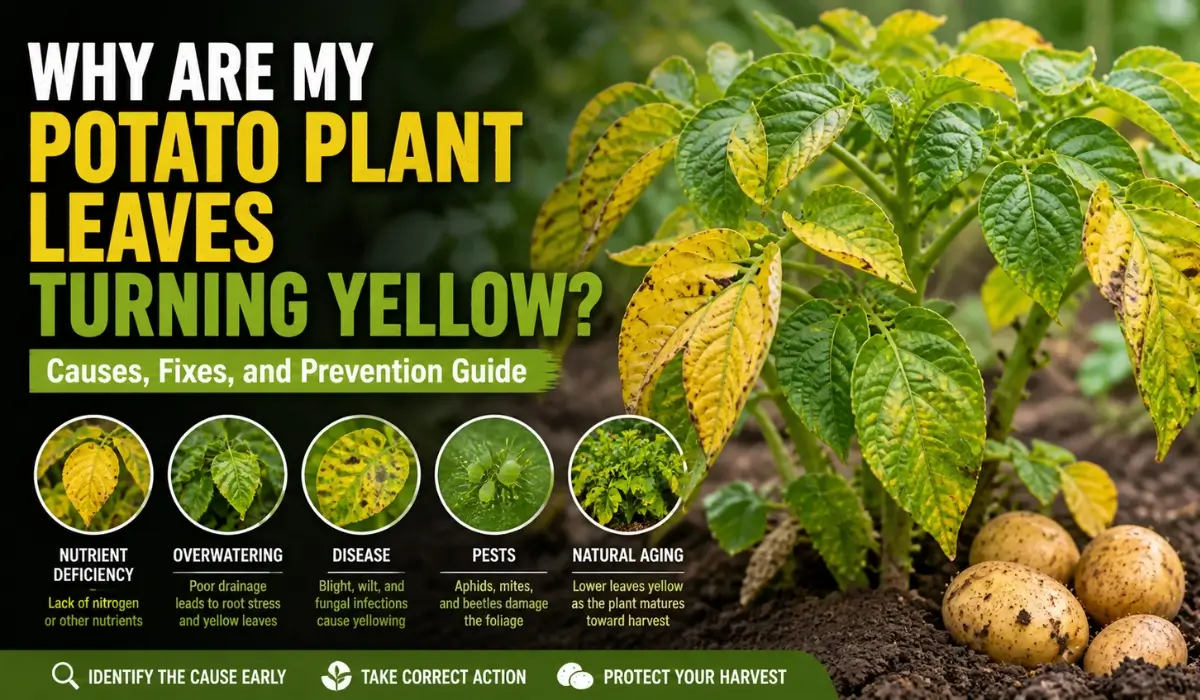
Potato plant leaves turning yellow because of watering issues, nutrient deficiencies, pests, disease, or natural maturation. Early yellowing often signals a problem, while late-season yellowing can simply mean your potatoes are nearing harvest. Correct diagnosis is essential to protect your crop and maximize yields.
- Overwatering and poor drainage are major causes of yellow leaves
- Nitrogen deficiency commonly causes pale, weak foliage
- Blight, wilt, and fungal diseases can quickly spread
- Pests like aphids and leafhoppers may damage leaves
- Some yellowing is natural near harvest time
Growing potatoes can feel straightforward—until those healthy green leaves suddenly fade yellow. For many gardeners, this is where confusion starts. Sometimes it’s harmless. Other times, it’s an early warning sign that your harvest is at risk.
What Causes Potato Plant Leaves Turning Yellow?
Yellow potato leaves are most often caused by environmental stress, disease, nutrient imbalance, or seasonal aging.
Common causes include:
| Cause | Symptoms | Severity |
|---|---|---|
| Overwatering | Yellow lower leaves, soggy soil | Moderate–High |
| Underwatering | Dry, curling leaves | Moderate |
| Nitrogen Deficiency | Pale yellow leaves, slow growth | Moderate |
| Early/Late Blight | Spots, lesions, leaf death | Severe |
| Verticillium Wilt | Yellowing from bottom upward | High |
| Natural Maturity | Even yellowing late season | Low |
Here’s the truth:
Not all yellow leaves mean disaster—but ignoring the wrong signs can cost your harvest.
Are You Overwatering Your Potato Plants?
Overwatering is one of the most common reasons potato plants develop yellow leaves.
Signs of overwatering:
- Yellow lower leaves
- Wilted appearance despite wet soil
- Root rot
- Poor tuber development
- Mushy stems
Why it happens:
Potatoes need moisture—but they hate soggy roots. Excess water reduces oxygen, leading to root stress and fungal growth.
Fix:
- Water deeply but less often
- Improve soil drainage
- Use raised beds if soil is heavy
- Avoid watering late in the day
Could Your Potato Plants Be Underwatered?
Dry soil can also trigger yellowing, especially during hot weather.
Symptoms:
- Crispy leaf edges
- Curling leaves
- Wilting
- Stunted growth
- Smaller potatoes
Solution:
- Maintain consistent moisture
- Mulch to retain water
- Water early morning
- Increase watering during tuber formation
Is Nutrient Deficiency Causing Yellow Leaves?
Nitrogen deficiency is one of the most frequent nutrient-related causes.
Signs:
- Uniform yellowing
- Slow growth
- Thin stems
- Smaller leaves
Solutions:
- Apply balanced vegetable fertilizer
- Use compost or aged manure
- Avoid excessive nitrogen late season
Important:
Too much fertilizer can encourage leafy growth but reduce potato production.
Could Potato Blight Be the Problem?
Blight is one of the most serious threats to potato plants.
Early Blight Symptoms:
- Brown concentric spots
- Yellow halos around lesions
- Lower leaf infection first
Late Blight Symptoms:
- Dark water-soaked patches
- Rapid collapse
- White mold under leaves
Prevention:
- Space plants for airflow
- Water soil, not leaves
- Rotate crops
- Remove infected foliage immediately
Reality:
Blight can destroy an entire crop quickly if ignored.
Are Pests Damaging Your Potato Leaves?
Several pests can trigger yellowing.
Common offenders:
- Aphids
- Leafhoppers
- Spider mites
- Colorado potato beetles
Warning signs:
- Speckling
- Curling
- Holes
- Sticky residue
- Visible insects
Treatments:
- Neem oil
- Insecticidal soap
- Row covers
- Beneficial insects
Is Yellowing Normal Before Harvest?
Yes—sometimes yellow leaves simply mean your potatoes are finishing their life cycle.
Natural maturity signs:
- Even yellowing across plant
- Leaves drying out
- Flowering completed
- 2–3 weeks before harvest
What to do:
- Stop watering
- Allow skins to set
- Harvest once vines die back
How to Revive Potato Plants with Yellow Leaves
If disease isn’t severe, recovery is often possible.
Recovery checklist:
- Adjust watering
- Test soil nutrients
- Fertilize appropriately
- Check for pests
- Remove diseased leaves
- Improve airflow
- Rotate planting areas
Practical gardening insight:
Most potato problems worsen because gardeners react too late. Daily observation can make the difference.
How to Prevent Yellow Leaves on Potato Plants
Prevention strategies:
- Use well-draining soil
- Rotate crops yearly
- Avoid overcrowding
- Water consistently
- Fertilize properly
- Mulch
- Monitor pests early
- Choose disease-resistant varieties
People Also Ask
Why are my potato plant leaves turning yellow and curling?
Usually caused by watering stress, pests, or nutrient deficiencies.
Should I cut yellow leaves off potato plants?
Remove diseased leaves, but natural maturity yellowing usually doesn’t require pruning.
Can overwatered potatoes recover?
Yes, if root damage is limited and drainage improves quickly.
Does yellowing mean potatoes are ready to harvest?
Sometimes—particularly if yellowing occurs late in the growing cycle.
What deficiency causes yellow leaves in potatoes?
Nitrogen deficiency is the most common.
Final Thoughts
Yellow potato leaves are a signal—not a diagnosis.
Sometimes it’s simply:
- Seasonal maturity
- Minor nutrient imbalance
Other times:
- Blight
- Root rot
- Serious pest damage
The key is identifying the cause early.
Healthy potato plants depend on:
- Balanced moisture
- Proper nutrition
- Disease prevention
- Vigilant monitoring
With quick action, many yellowing potato plants can recover—and still produce an excellent harvest.